What are Amine Hormones?
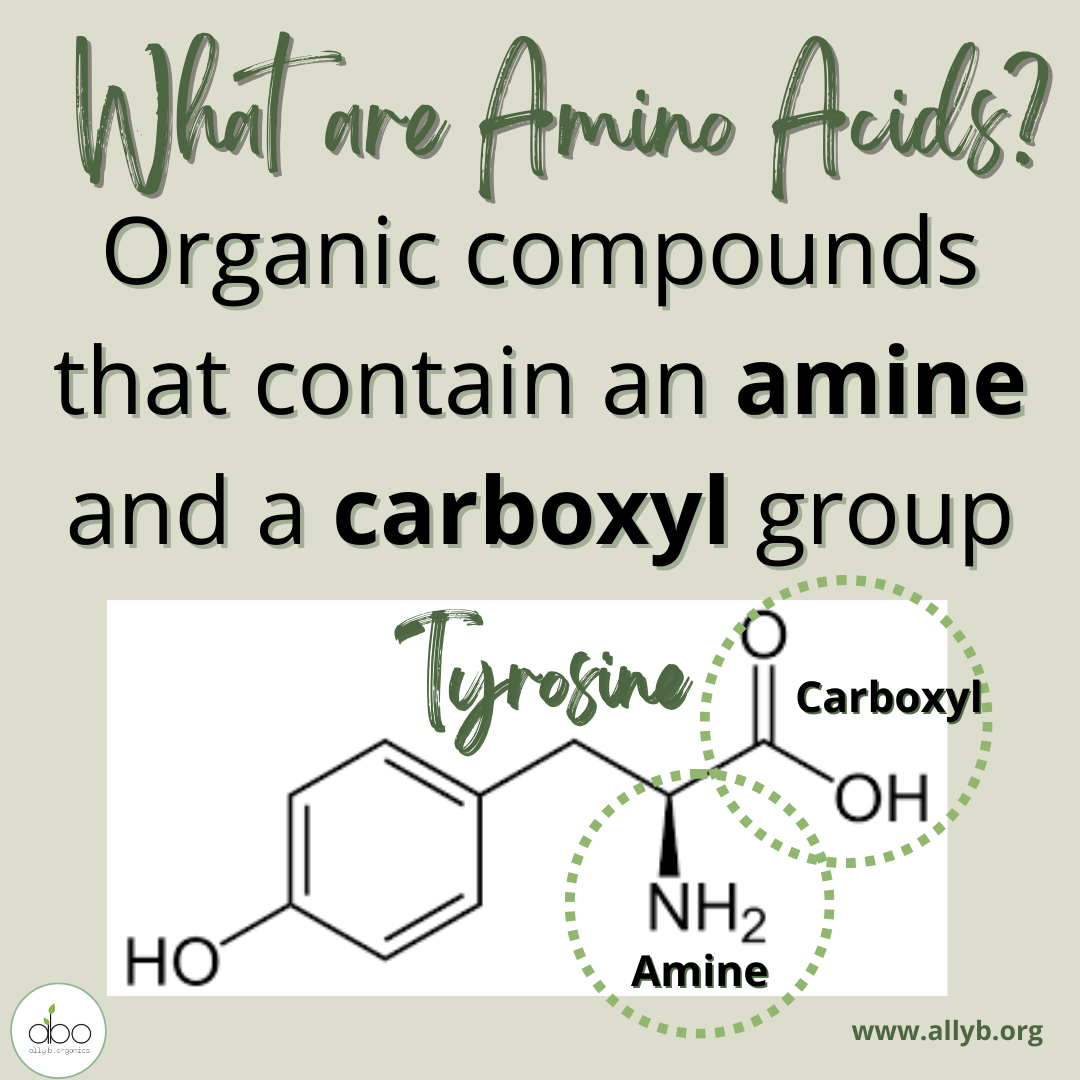
Amine Hormones are derived from amino acids, with Tyrosine (C₉H₁₁NO₃ ) being the most significant [1].
Amino Acids are organic compounds that contain an amine group and a carboxyl group.
Amine functional groups can be identified by the presence of a nitrogen molecule. Carboxyl groups contain an oxygen molecule double bonded to a carbon [2].
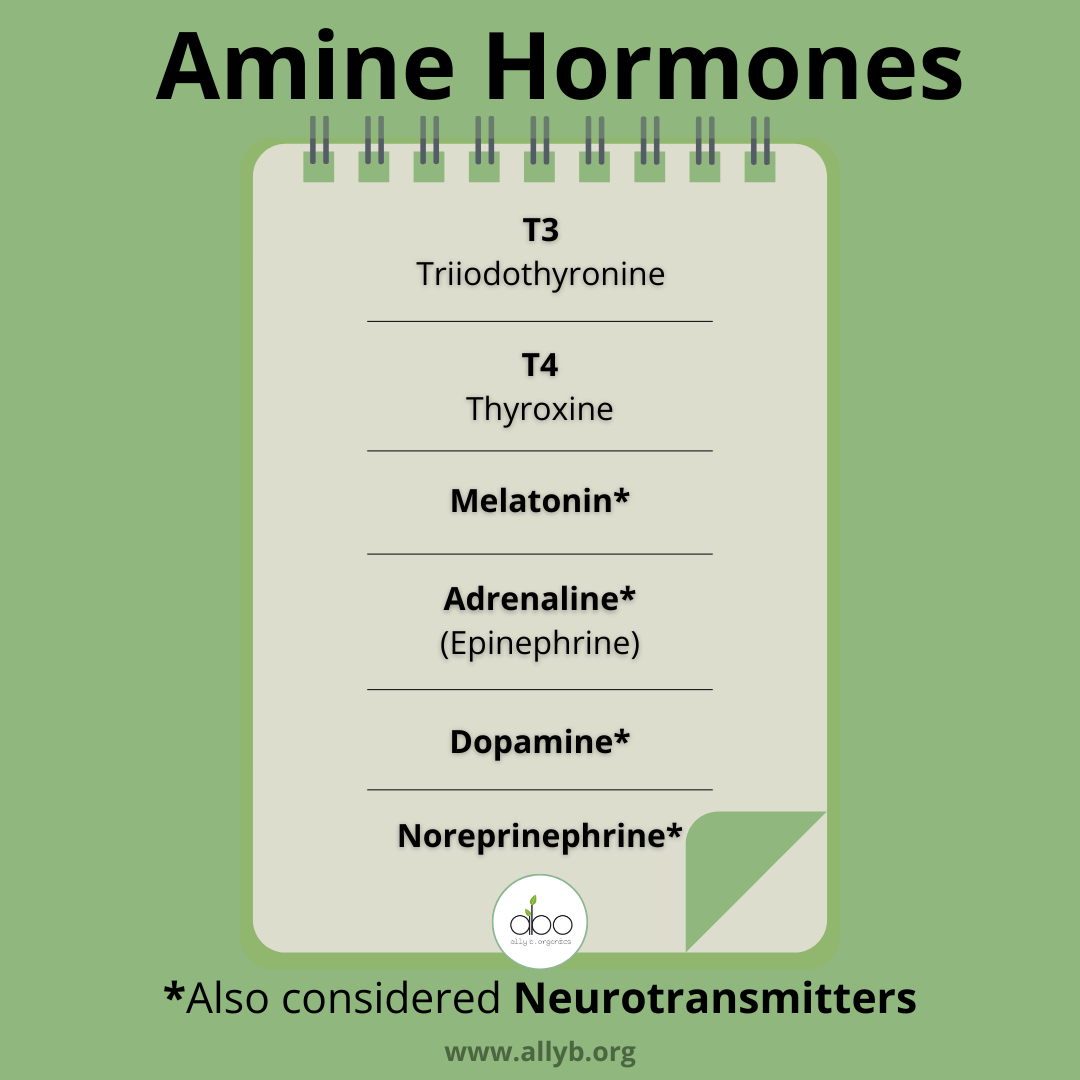
Amine Hormones include:
T3 (Triiodothyronine) and T4 (Thyroxine) are thyroid hormones triggered by the production of TSH (thyroid-stimulating hormone).
TSH is a peptide hormone secreted by the pituitary gland. Various sequences of similar mechanisms occur to regulate bodily functions and maintain homeostasis.
Melatonin, dopamine, epinephrine, and norepinephrine are amine hormones more commonly considered to be neurotransmitters [3].
Dopamine, epinephrine, and norepinephrine are also classified as catecholamines, which are hormones produced by the T-medulla in the adrenal glands. Unlike the other two catecholamines, dopamine is mainly produced in the brain but does undergo some synthesis in the T-medulla within the adrenals [3].
SOURCES
[1] “Brent Cornell.” BioNinja, ib.bioninja.com.au/standard-level/topic-6-human-physiology/66-hormones-homeostasis-and/types-of-hormones.html. Accessed 20 Dec. 2023.
[2] Lopez, Michael J, and Shamim S Mohiuddin. “Biochemistry, Essential Amino Acids - StatPearls - NCBI BOOKSHELF.” National Library of Medicine, National Center for Biotechnology Information, 13 Mar. 2023, www.ncbi.nlm.nih.gov/books/NBK557845/.
[3] Paravati, Stephen. “Physiology, Catecholamines - Statpearls - NCBI Bookshelf.” National Library of Medicine, National Center for Biotechnology Information, 24 Oct. 2022, www.ncbi.nlm.nih.gov/books/NBK507716/.